

The Fitting Edition


Welcome to Sew & Tell, our new weekly edit landing every Wednesday. Inside you’ll find sewing tips, clever tricks, inspiration for when your sewjo is hiding, and plenty of answers to your burning questions.
Each week, we’ll spotlight one question from our community - so if there’s something you’ve been wondering about your sewing projects, just get in touch and let us know. Everything we share is designed to help you sew with more confidence.
This week we are diving into fitting and trust me there's a lot to share!
✂️ Tip of the Week - Why Your Dressmaking Patterns Might Not Fit Properly
One of the biggest things people don’t realise when they start dressmaking is that most sewing patterns are drafted for a B cup bust unless the pattern specifically states otherwise.
In pattern cutting terms, a B cup means there is a 2 inch difference between your high bust measurement and your full bust measurement. So if your high bust is 38" and your full bust is 40", that’s considered a B cup in sewing pattern sizing.
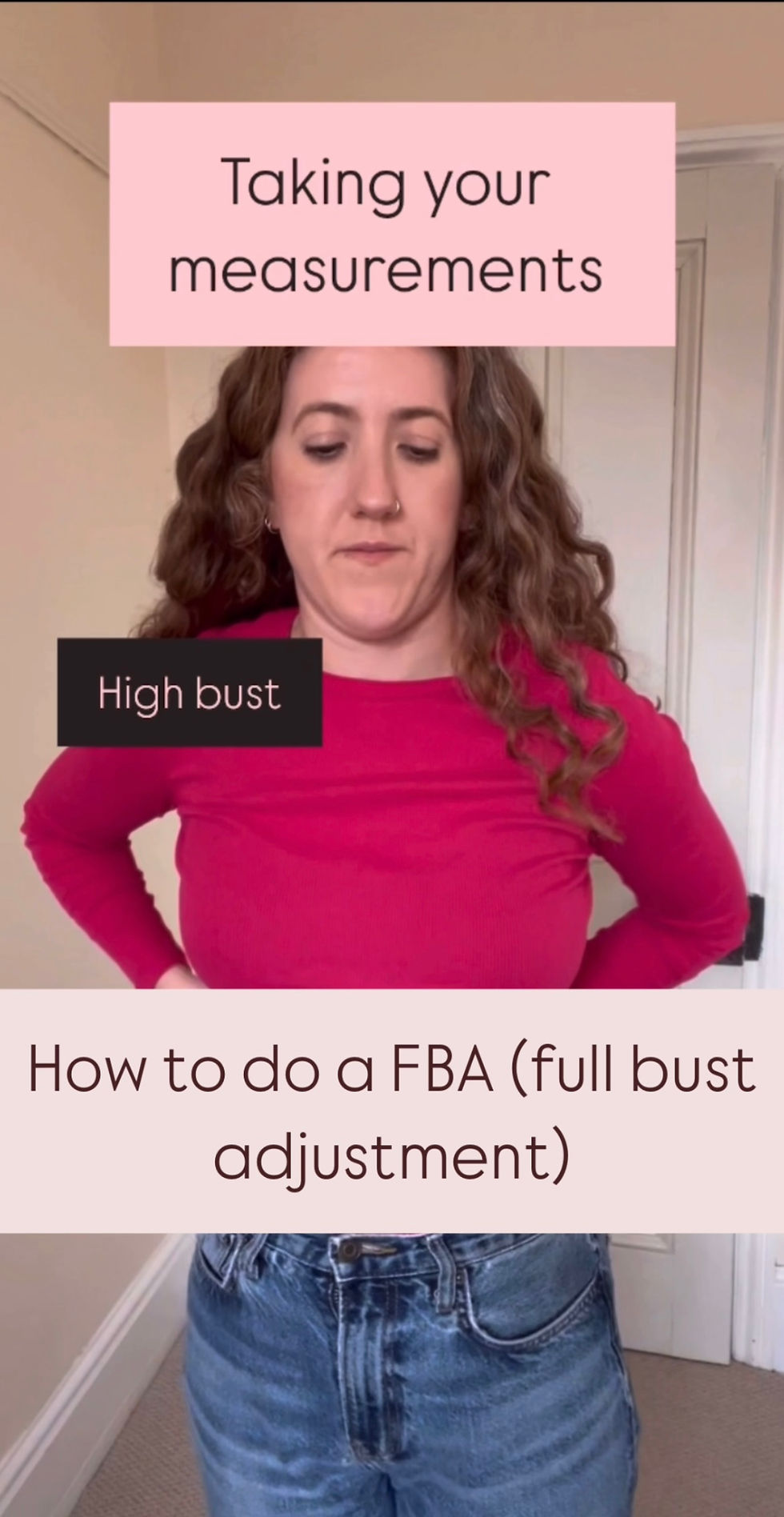
If your difference is larger than 2 inches, you’ll usually get a much better fit by choosing your size based on your high bust measurement first, then doing a Full Bust Adjustment (FBA) to add extra room for your bust.
A really common mistake is choosing a size purely from the full bust measurement. The problem is that this often makes the rest of the garment too big, especially around the shoulders, neckline and armholes.
This is why so many handmade garments end up with necklines that gape, shoulders that fall off, or armholes that feel huge, even though the bust technically fits.
Most patterns don’t actually include a high bust measurement, but you can work it out yourself. Because patterns are drafted for a 2 inch difference, you simply subtract 2 inches from the full bust measurement listed on the size chart.
For example:
If the pattern size chart says the full bust is 40", the high bust for that size will be approximately 38".
You can then work backwards through the size chart until you find the size that matches your own high bust measurement, and use that as your starting point before doing an FBA.
If you’ve never done a Full Bust Adjustment before, don’t panic, it’s much simpler than it sounds once you understand the process. We’ve linked a helpful tutorial below to get you started.
🧵 This Week’s Fabric & Pattern Inspiration
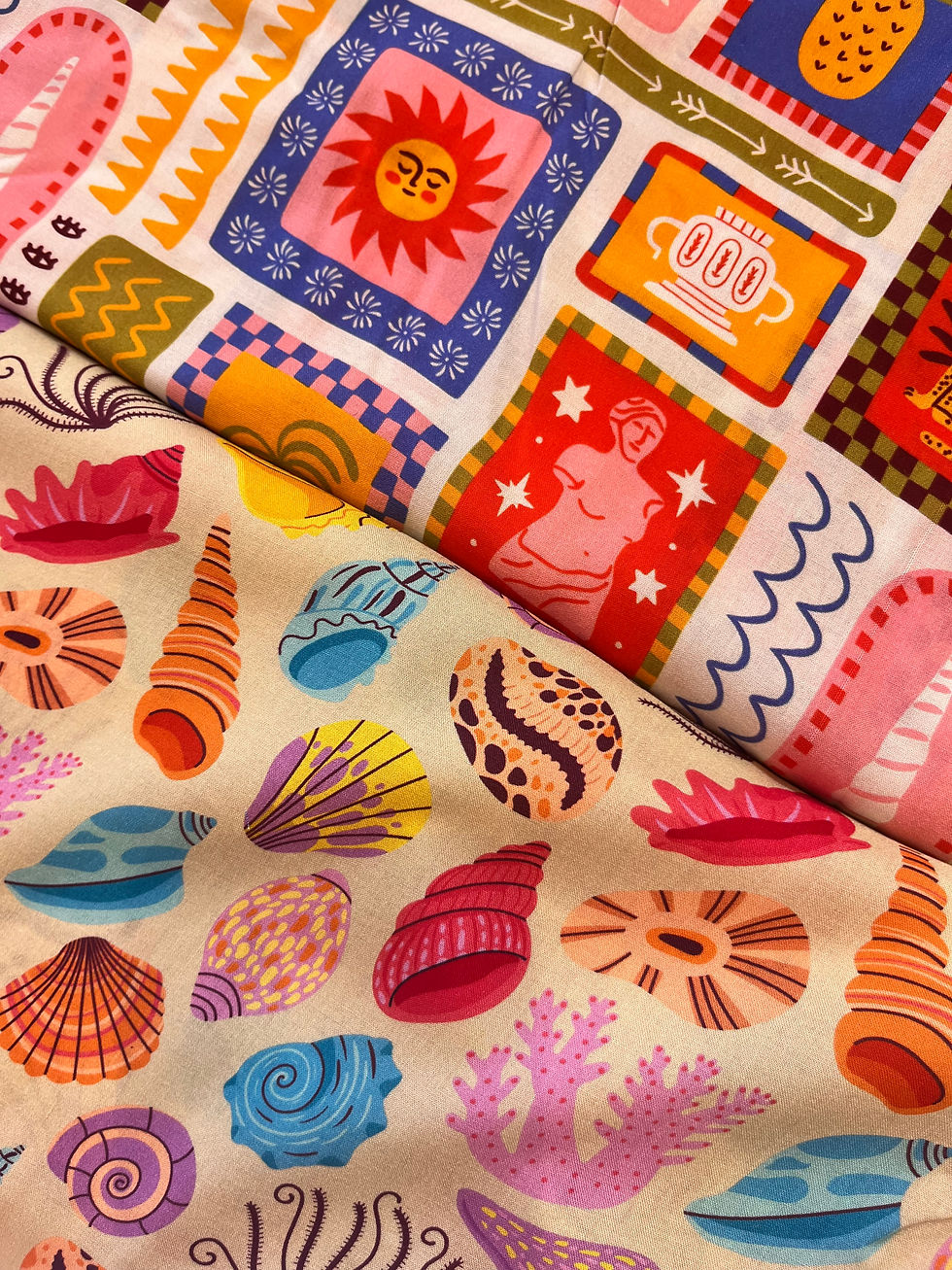
This week we’re focusing on two gorgeous viscose prints that are perfect for spring and summer sewing.
First up is our Seaside Treasures Viscose Lawn. This fabric features beautifully detailed shells and coral reef motifs in bright, vibrant colours set against a soft neutral background. It has a lovely light drape and would work perfectly for floaty dresses, skirts and relaxed trousers.
We’re also loving our Summer Storyboard Viscose, which has that really popular illustrated print style that’s everywhere on the high street at the moment. It’s bold, fun and really versatile, making it ideal for statement garments that still feel easy to wear.
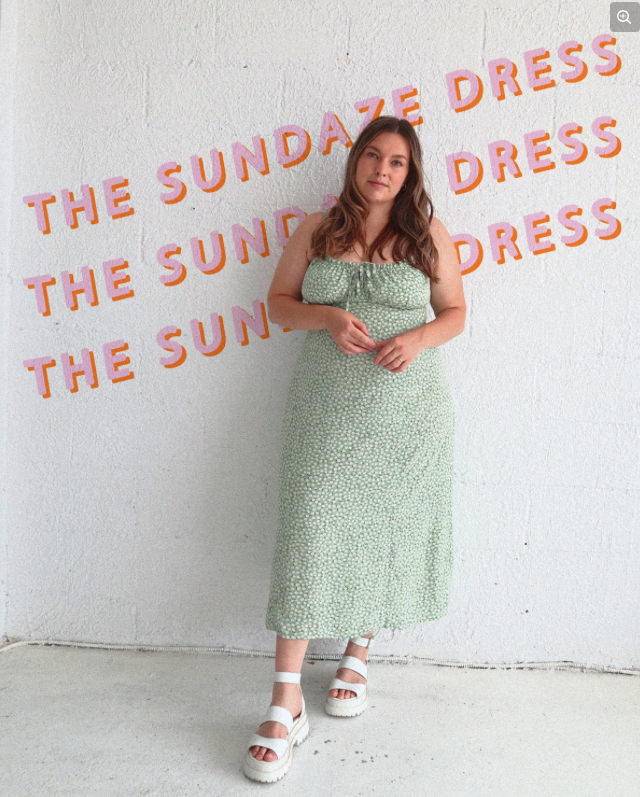
Both fabrics would sew up beautifully into lots of different makes. Some pattern inspiration ideas include:
All of these would show off the drape and print of the fabrics really well and are great options depending on whether you want something relaxed, fitted, or a bit more dramatic.


🧵 On The Cutting Table - Crossbody bag
This week I am sewing up samples of the Athena Crossbody pattern by Knot and Thread Design for our upcoming cross body bag workshop. I’m really excited by my fabric choices and, to make my life harder, I’ve decided to start making three different versions (mostly because I loved all the fabrics and couldn’t decide which to do first!).
Whether I get all three finished or not remains to be seen, but I’m definitely going to make at least one.
Which one do you think I should finish first: Seafood Picnic (with the lobsters), Playful Pups (with the dogs) or Go Fish?
⭐ Workshop Spotlight: Learn to Fit Dressmaking Patterns
If you’ve ever made something that looked great on the pattern envelope but just doesn’t sit quite right on your body, this workshop is for you.
In Learn to Fit Dressmaking Patterns, we focus on the most common fitting frustrations people run into when sewing at home, and it all starts with choosing the right size. One common misconception is that you can simply choose a bigger size and take it in at the sides if it’s too big. Once you understand how patterns are graded, you realise it’s actually very difficult to successfully reduce a garment once it’s been made. In reality, it’s often much more effective to start with the closest fitting base size and then add shape where it’s actually needed.
Another issue is assuming that fitting adjustments are always made at the side seams. In practice, fit problems are often more complex and usually show up at the bust, shoulders, neckline, and sometimes in length as well as width, which is why a more considered approach makes such a difference.
Rather than guessing what’s gone wrong, we’ll help you learn how to read the garment itself and understand what’s happening when you try it on.
You’ll start to recognise key fitting issues and learn simple, practical ways to begin correcting them so your handmade clothes start to feel much more intentional and wearable. We do this over the course of the day by making multiple toiles and refining the fit step by step until we get something that works beautifully.
This workshop is all about building confidence with fit, so you can stop relying on luck with sizing and start making informed adjustments that actually work for your body.

FAQ: I’m new to dressmaking, how do I pick my size?
Knowing which size to choose can feel really confusing when you’re new to dressmaking. A common assumption is that you can just use your usual shop-bought clothing size, but unfortunately that doesn’t translate directly to sewing patterns.
High street sizing and dressmaking pattern sizing don’t correlate, so the most important thing is to always go by your body measurements. Take your full bust, waist and hip measurements and compare them to the pattern size chart. It’s very normal to fall into different sizes for each measurement, for example one size for your bust, another for your waist, and another for your hips.
Once you’ve chosen your size range, the next step is to look at the finished garment measurements. This is where things really start to make sense. Compare your chosen body measurement size to the finished garment measurements and subtract the difference. What you are left with is called ease.
The first 1 to 2 inches is known as wearing ease. This is what allows you to move, breathe, sit down and actually live in your clothes comfortably. Anything beyond that is design ease, which is the extra room the designer has intentionally added to achieve a specific style or silhouette. For example, a boxy top will naturally have a lot more design ease than a fitted blouse.
Most beginner sewing patterns are designed to be fairly forgiving and more relaxed in fit, so if you’re just starting out you don’t need to worry too much about advanced fitting adjustments straight away. A lot of this comes with time and practice as you make more garments and start to understand how different shapes behave on your body.
Once you understand this, you can start to decide how you want your garment to fit. You might prefer something closer fitting, or you may want a looser, more relaxed style. This then helps you decide whether to stay with your chosen size or size down slightly while still allowing for enough wearing ease.
We cover all of this and much more in our new Beginners Capsule Wardrobe course starting on Tuesday 30th June. We’re so excited that 40% of the spaces have already been booked up!
❓ Got a sewing question you’d love us to answer? Share it with us - it might inspire next week’s email!
That’s it for this week’s Sew & Tell! I hope you’ve found a little inspiration, a handy tip, or a spark to get back into your sewing projects.
Until next Wednesday, happy sewing!
Rosie xxx


Comments