

The Fabric Weaves Edition


Welcome to Sew & Tell, our new weekly edit landing every Wednesday. Inside you’ll find sewing tips, clever tricks, inspiration for when your sewjo is hiding, and plenty of answers to your burning questions.
Each week, we’ll spotlight one question from our community - so if there’s something you’ve been wondering about your sewing projects, just get in touch and let us know. Everything we share is designed to help you sew with more confidence.
This week we are diving into fabric weaves and trust me there's a lot to share!
✂️ Tip of the Week - understanding fabric weaves
A fabric weave is the way threads are interlaced on a loom to create cloth. The pattern of that interlacing affects everything from strength and drape to texture and stability.
Common fabric weaves and examples
Plain weave
In a plain weave, each weft thread passes over one warp thread and under the next, alternating in a simple grid pattern. This creates a balanced, stable fabric.
Examples include: Cotton poplin, lawn, calico, voile, muslin
Plain weave fabrics are usually stable, easy to sew and great for beginners.
Twill weave
In a twill weave, the weft thread goes over one or more warp threads and then under one or more, with each row offset. This creates the characteristic diagonal rib.
Examples include: Denim, chino, drill, gabardine, tweed
Twill fabrics are generally strong and durable, often with good drape depending on fibre content. They are ideal for trousers, jackets and structured garments.
Satin weave
In a satin weave, threads float over several others before interlacing, which reduces the number of intersections and creates a smooth, lustrous surface.
Examples include: Satin, duchess satin, charmeuse, crepe-backed satin
These fabrics tend to drape beautifully but can be slippery and require more care when sewing.
Basket weave
In a basket weave, two or more warp threads are woven over and under two or more weft threads as a group. This creates a looser, more textured variation of plain weave.
Examples include: Oxford cloth, canvas, Panama weave cotton, linen, silk, wool.
Basket weave fabrics can range from light to quite substantial depending on the yarn used. They are often breathable and textured, making them suitable for relaxed shirts, dresses and casual separates.
Jacquard weave
In a jacquard weave, each warp thread is controlled individually on a special loom, allowing complex patterns to be woven directly into the fabric.
Examples include: Brocade, damask, decorative upholstery fabrics
These fabrics are often more structured and decorative, making them ideal for statement garments and special occasion pieces.
Knit (fabric construction)
Knit fabrics are not woven in the traditional sense. Instead of interlacing threads, knit fabrics are made by looping yarns together. This looped structure gives knit fabrics their natural stretch and recovery.
Examples include: Jersey, rib knit, Ponte Roma
Knit fabrics are comfortable, flexible and forgiving, which makes them ideal for fitted garments, casual wear and anything that needs stretch.
It is also worth knowing that not all stretch fabrics are knits. Some woven fabrics include elastane (also called spandex or Lycra), which gives them stretch even though they are still woven (such as stretch denim). So stretch can come either from the construction (knit structure) or from fibre content added to a woven fabric.
Why this matters for your sewing
Once you understand weave, you start to predict how a fabric will behave before you even buy it. Will it hold a collar? Will it drape into gathers? Will it fray easily? These are all influenced by weave, not just fibre content or weight.
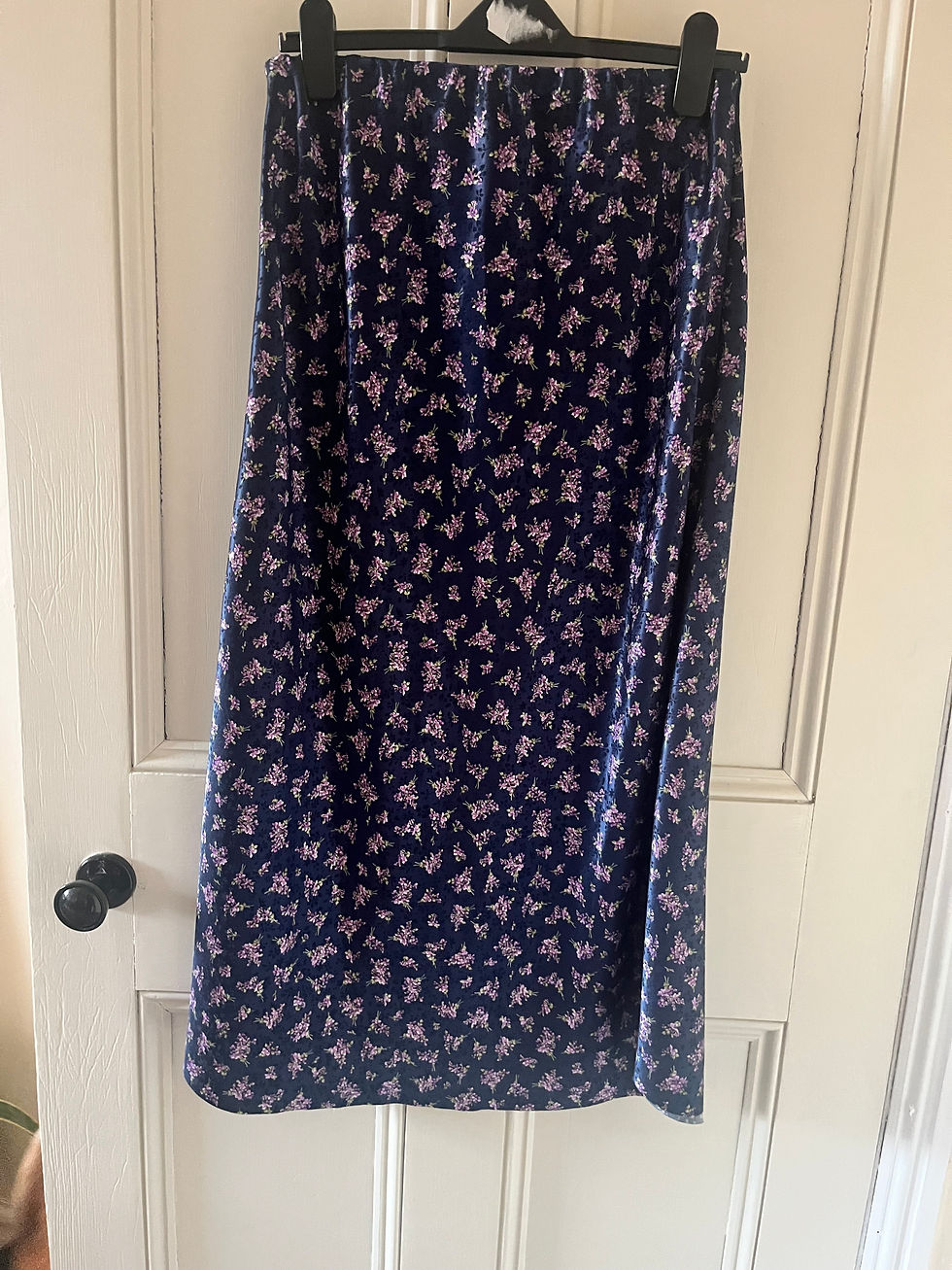
🧵 This Week’s Make Inspiration: Bias Cut Skirt
I am in love with this bias cut skirt I just finished sewing. It’s the Genoa Skirt by Style Arc, and I added a little extra seam allowance so I could French seam the side seams, and honestly, it was so worth it.
I really enjoy sewing this style of skirt. Depending on fabric choice, it can actually be a really easy make because it’s cut on the bias, so there are no darts needed. The natural give in the bias helps the fabric skim and shape around the body beautifully, which is what gives it that fluid, flattering fit.
I’m already planning what else I can make from this pattern. I’ve got my eye on a green linen from my stash as we speak, but I’m also very tempted by some of the fabrics in the shop. It would look absolutely gorgeous in our new Seafood Picnic cotton, especially with the print sitting on the diagonal, it would look so striking.
If you wanted to make it a slightly more advanced version, it would also be stunning in one of our new viscoses, I’m thinking Summer Storyboardwould be perfect for that soft drape and movement.
And if this has you inspired, we are actually using this pattern in our upcoming Learn to Sew Silky Fabrics workshop, so you can come and sew it with us step by step.

🧵 On the Cutting Table: Swimwear
This week’s sewing has been all about swimwear for me. I’ve been making my own swimwear and activewear for years now and I absolutely love it, but I still remember the first time I tried to sew with Lycra and I honestly didn’t have a clue what I was doing.
I completely understand how daunting it can feel at the beginning, but I promise it’s one of those projects where, once you’ve had a go and picked up a few key tips, you’ll wonder why you didn’t start sewing your own swimwear sooner. It is such a rewarding make, especially when you get to wear something that fits you properly and feels really comfortable.
This week I’ve been sewing the Helens Closet Sunstar Swimsuit in our Daisy swimwear fabric, along with the Closet Core Faye Bikini, also in our Daisy swimwear fabric. Both are such brilliant patterns for showcasing stretch fabric and getting confident with sewing Lycra.
So, who fancies having a go at sewing their own swimwear?
Join us on 30th May for our Learn to Sew Swimwear workshop and we’ll guide you through the whole process step by step

⭐ Sewing Skills: Getting the Basics Right
The way a fabric is woven or constructed can also have a big impact on the needle you should use when sewing. Tightly woven fabrics, like denim or cotton drill, are denser and stronger, so they usually need a sharper, stronger needle such as a denim or universal needle in a larger size to penetrate the fibres cleanly without breaking.
In contrast, lightweight or loosely woven fabrics like voile or muslin are much more delicate, so a finer needle is needed to avoid leaving visible holes or causing pulls. Knit fabrics behave differently again because of their looped structure and stretch, so a ballpoint or stretch needle is used to move between the fibres rather than piercing and damaging them.
Choosing the right needle based on weave or construction helps prevent skipped stitches, fabric damage and uneven seams, and makes the whole sewing process much smoother.

FAQ: Do I need to pre-wash my fabric before I start sewing?
Yes, in most cases you should pre-wash your fabric before you start sewing, especially if it is going to be made into clothing.
Natural fibres like cotton, linen and viscose can shrink in the first wash, sometimes quite significantly. If you skip pre-washing, you risk spending hours making a garment only for it to shrink or change shape after its first wash, try to allow for an extra 3-5% shrinkage when buying fabrics.
Pre-washing also helps remove any finishing treatments from the fabric, such as sizing, which can make it feel stiffer in the shop than it will once washed. In the case of dyed fabrics, it can also help remove any excess dye, reducing the risk of colour transfer or fading later on.
It is also worth remembering that most fabrics will have been handled quite a lot before they reach you. They may have been stored in warehouses, transported between mills and suppliers, and handled by many people in shops or studios. Pre-washing simply refreshes the fabric and brings it back to a clean, stable starting point for sewing.
There are a few exceptions. Very delicate fabrics like silks may need special handling or dry cleaning instead, and some structured fabrics like wool coating are often not pre-washed at all and are instead steamed before cutting.
A good rule of thumb is to treat your fabric the way you intend to care for the finished garment. If it will be machine washed, wash the fabric first in the same way.
❓ Got a sewing question you’d love us to answer? Share it with us - it might inspire next week’s email!
That’s it for this week’s Sew & Tell! I hope you’ve found a little inspiration, a handy tip, or a spark to get back into your sewing projects.
Until next Wednesday, happy sewing!
Rosie xxx


Comments